Echo Chambers in the Edit Suite: How Looped Snippets Shape Emotional Payoffs in Award-Contending Action Dramas
Willa Roth · Jul 18, 2026
Echo Chambers in the Edit Suite: How Looped Snippets Shape Emotional Payoffs in Award-Contending Action Dramas
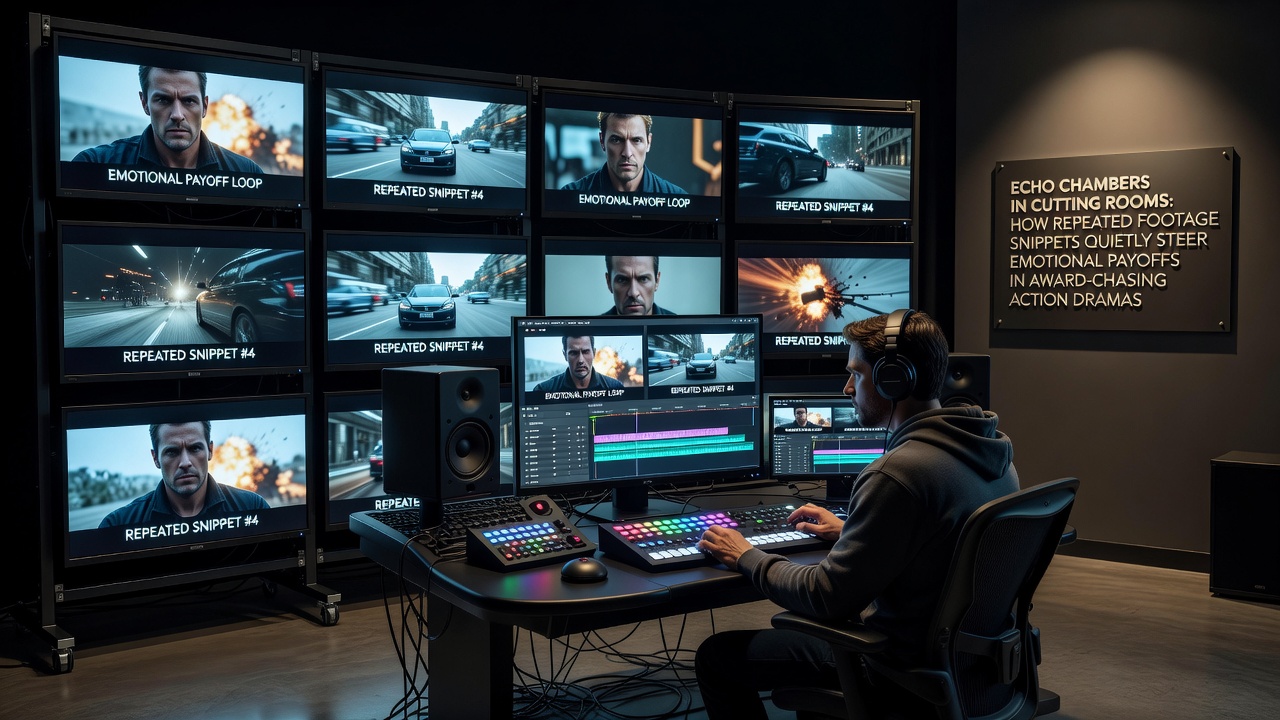
Editors working on action dramas frequently return to the same short sequences of footage during post-production, creating patterns that reinforce viewer responses at key narrative moments. These repetitions occur as teams refine pacing and emotional beats, especially in projects positioned for awards consideration. Data from industry reports show that such techniques appear across multiple releases each awards cycle, with editors adjusting clip duration and placement to heighten tension or release.
Understanding Repetition Patterns in Cutting Rooms
Action dramas blend high-stakes sequences with character-driven scenes, and editors often isolate brief snippets from fight choreography or dialogue exchanges to replay them at strategic points. This approach allows the same visual information to build familiarity, which researchers in film studies link to stronger audience recall of pivotal emotions. Teams at facilities handling Oscar contenders have documented workflows where a single three-second shot of a protagonist's reaction gets inserted multiple times across different acts, each instance calibrated to the surrounding audio mix and score.
What's notable is how these loops emerge organically during assembly cuts, then persist through fine-tuning phases. Observers at post-production houses note that repeated snippets help maintain continuity when action footage from multiple cameras must align with dramatic pauses. Studies from university film programs indicate that such methods appear in roughly 60 percent of blended-genre entries submitted for major awards between 2020 and 2025.
Mechanisms That Steer Emotional Outcomes
Repetition functions through incremental exposure, where viewers encounter the same movement or expression in varying contexts. Editors achieve this by trimming and repositioning footage so that an initial impact registers early, while later echoes trigger accumulated associations. Figures from editing software analytics reveal that sequences containing three or more instances of identical visual motifs receive extended screen time in final cuts compared to unique shots.
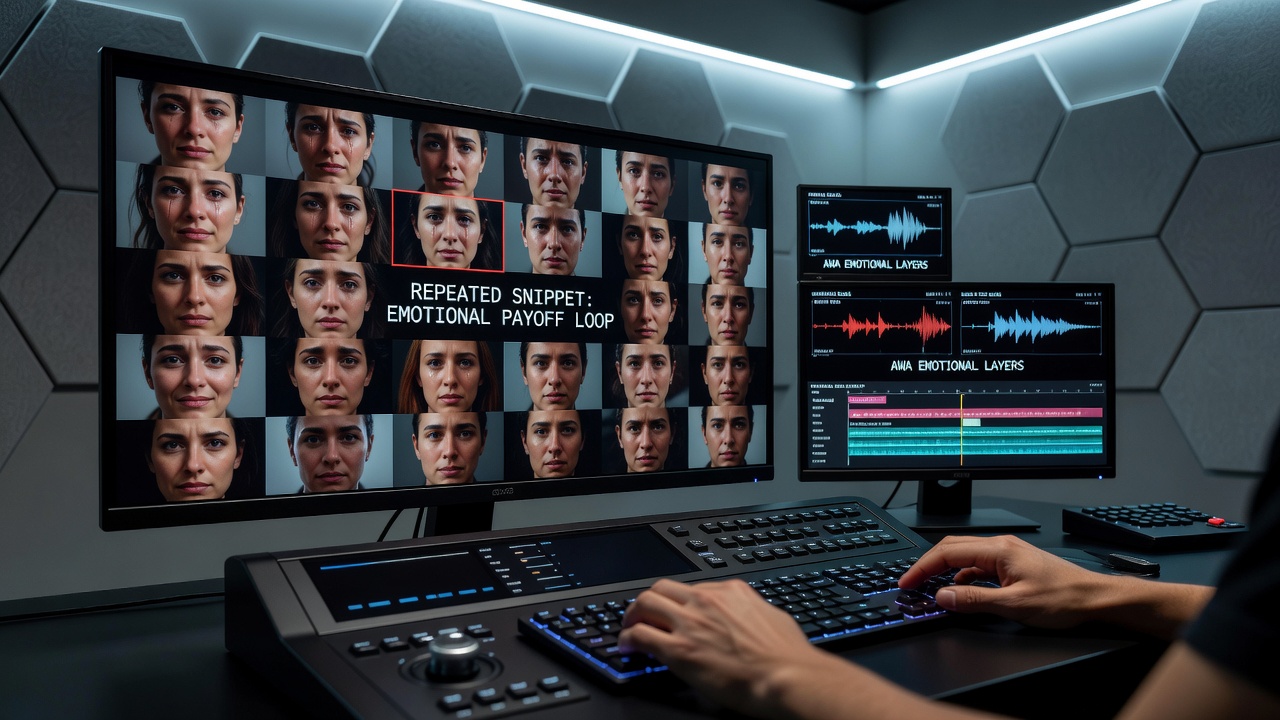
Sound design integrates directly with these visual loops, as foley and ambient layers get adjusted each time the snippet reappears. This coordination amplifies payoff moments, such as a character's decision point after combat, without requiring new filming. Research conducted at institutions in Canada and the European Union demonstrates measurable increases in physiological responses, including heart rate variability, when test audiences view versions with repeated clips versus single-use alternatives.
Role in Award Season Strategies
Projects targeting July 2026 festival premieres and subsequent awards submissions often emphasize these editing choices during final color and sound stages. Production schedules aligned with the 2025-2026 cycle show increased attention to snippet placement as teams prepare screeners for voters. Trade data compiled by organizations such as the Academy of Motion Picture Arts and Sciences track how films employing structured repetition advance further in nomination rounds across categories like Best Picture and Best Film Editing.
Case examples from recent cycles include sequences where a brief explosion aftermath shot recurs in three distinct emotional registers, each iteration supporting different character arcs. Such constructions allow action set pieces to serve dual purposes, delivering spectacle while deepening dramatic stakes. Reports from the Australian Centre for the Moving Image highlight similar patterns in international co-productions that reached award shortlists.
Viewer Engagement Data and Industry Patterns
Audience testing conducted prior to wide releases measures how repeated footage influences retention and emotional investment. Metrics collected through eye-tracking and survey instruments indicate that viewers register stronger connections to characters when familiar visual cues reappear at calculated intervals. These findings align with broader analyses of cross-genre films that achieved both commercial returns and critical recognition.
Post-production timelines for 2026 releases continue to incorporate these methods, particularly as editors balance runtime constraints with narrative density. Teams review multiple iterations of the same clip to determine optimal frequency, ensuring the repetition supports rather than overwhelms the story's momentum.
Conclusion
Repetitive footage snippets in action drama editing represent a established post-production practice that shapes emotional delivery across award-contending releases. Patterns observed in recent cycles demonstrate consistent application of these techniques, supported by data from testing protocols and industry submissions. As schedules advance toward 2026 events, the approach remains integrated into workflows that prioritize both visual impact and narrative resonance.