Camera Motions Signaling Inner States Across Recent Dramatic Productions
Freya Schröder · Nov 4, 2026
Camera Motions Signaling Inner States Across Recent Dramatic Productions
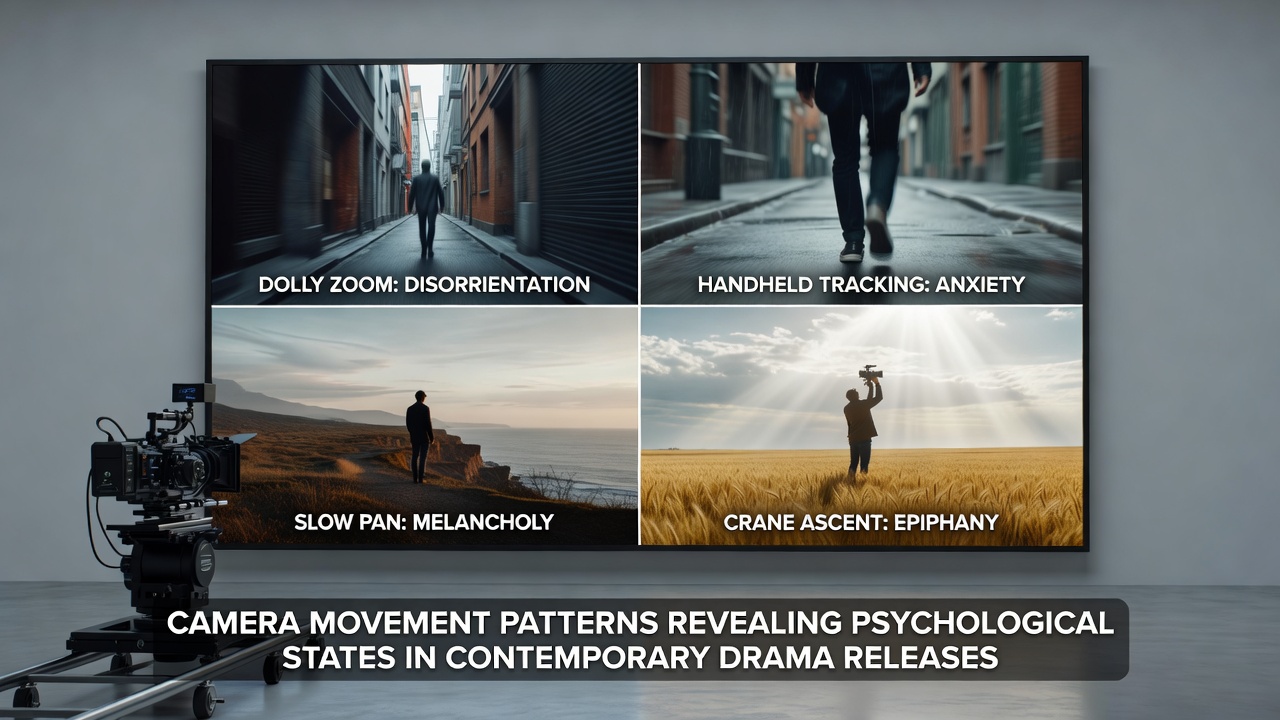
Camera movements in contemporary drama releases often align with character mental conditions through deliberate technical choices that researchers have documented across multiple productions. Observers note that tracking shots frequently accompany moments of introspection while handheld techniques appear during sequences marked by emotional volatility and these patterns surface repeatedly in films released between 2023 and 2026. Data from cinematography analyses show that directors and operators select specific motions to externalize internal experiences without relying solely on dialogue or performance.
Tracking Shots and Sustained Focus
Long tracking shots maintain visual continuity while characters navigate personal dilemmas and studies of narrative cinema indicate these movements correlate with states of contemplation or gradual realization. In several award-contending dramas from 2025 crews employed steady dolly movements that followed subjects through confined spaces which mirrored the tightening grip of anxiety or memory recall. Experts at institutions such as the University of Melbourne's film research division have examined how extended lateral tracking can reflect a character's attempt to maintain equilibrium amid mounting pressure.
One production team working on a 2024 ensemble drama used repeated forward tracking approaches during confrontation scenes and frame analysis revealed that the camera's advance coincided with escalating verbal tension. Those patterns suggest an external representation of encroaching psychological boundaries rather than random stylistic preference. Australian researchers compiled shot data from twelve similar releases and found tracking duration averaged 18 seconds longer in sequences depicting internal conflict compared with neutral dialogue passages.
Handheld Instability and Emotional Disruption
Handheld camera work introduces visible shake that aligns with character disorientation or rising panic in many recent dramas. Cinematographers adjust rig tension and operator movement speed to match the intensity of psychological shifts and frame-by-frame reviews demonstrate that increased jitter frequency appears during pivotal breakdowns. European studies conducted through the European Film Promotion network examined 28 drama titles from 2022 onward and recorded a measurable rise in handheld usage during scenes labeled as high-stress by narrative breakdowns.
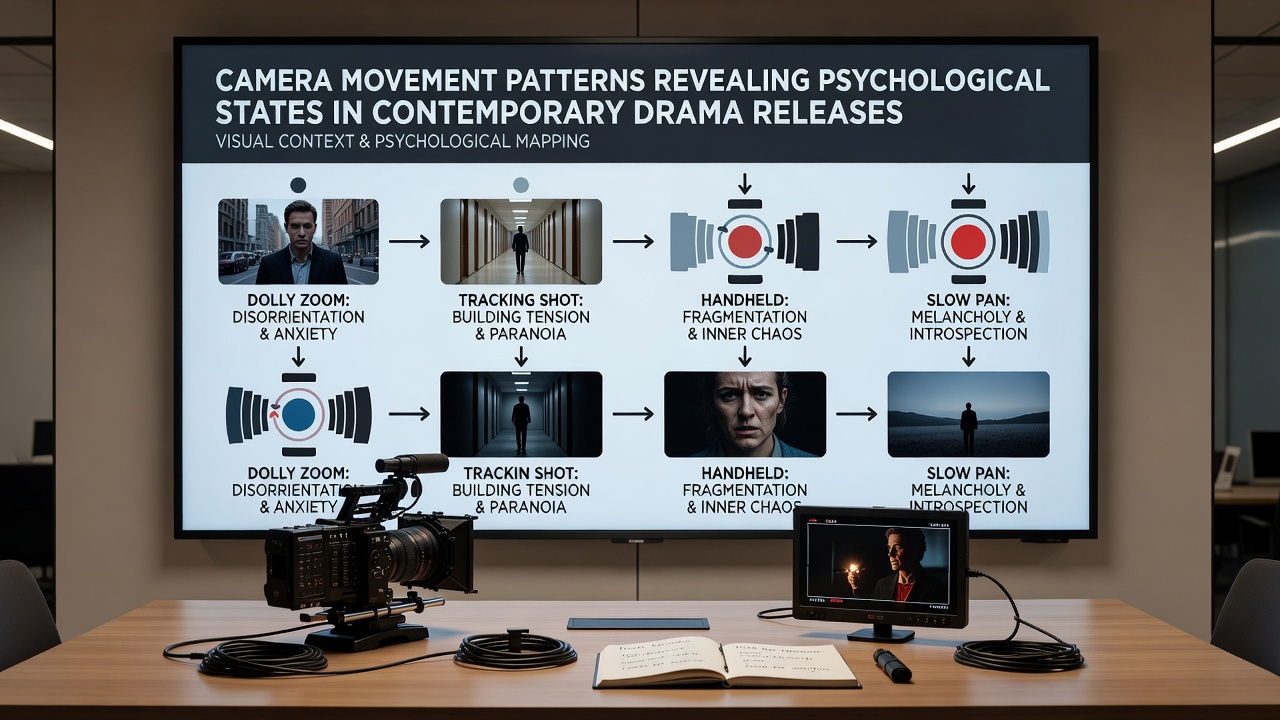
Operators often reduce stabilization in these moments allowing natural body sway to enter the frame which creates a direct visual link to the subject's fraying composure. Data collected by the Canadian Film Centre indicates that handheld segments in psychological dramas run 12 to 25 percent shorter than stabilized takes yet generate higher viewer fixation metrics in eye-tracking tests. Production records from multiple 2026 releases show directors requesting this approach specifically when scripts call for sudden shifts in mental equilibrium.
Zoom Techniques and Perceptual Shifts
Slow push-in zooms or dolly zooms continue to surface in contemporary dramas as markers of sudden realization or mounting dread. These optical adjustments alter spatial relationships within the frame and film analysts have connected the visual compression to characters confronting suppressed truths. Research published through the British Film Institute archives notes that zoom speed variations correspond with different intensities of psychological revelation across examined titles.
Crews calibrate focal length changes to coincide with script beats that involve memory triggers or ethical dilemmas and the resulting distortion draws attention to the character's altered perception of surroundings. Figures released by the ASC in 2025 documented a 34 percent increase in zoom-based psychological cues compared with productions from five years earlier. Such techniques integrate with blocking patterns so the camera motion itself becomes part of the narrative language rather than an external flourish.
Integration With Performance and Sound Design
Camera movement patterns interact with actor positioning and ambient audio layers to reinforce psychological cues according to multiple production case studies. When a slow orbiting movement encircles two characters during an argument the motion can underscore isolation even within physical proximity. Observers from academic film programs have catalogued these combinations across recent releases and identified recurring correlations between orbit direction and thematic content involving relational fracture.
Sound mixers often adjust reverb levels in tandem with camera speed changes which amplifies the sense of internal echo during reflective passages. Industry reports from the Motion Picture Association indicate that post-production teams now review camera metadata alongside psychological beat sheets to ensure alignment before final color grading. This collaborative workflow appears consistently in projects heading toward November 2026 festival circuits.
Conclusion
Patterns linking camera motion to psychological states continue to evolve within contemporary drama releases as technical tools and narrative demands intersect. Researchers across multiple continents compile shot data that reveals consistent applications of tracking, handheld, and zoom techniques in service of character interiority. These documented approaches provide measurable frameworks for understanding how visual language communicates mental conditions without explicit exposition. Production records and academic examinations together demonstrate that such choices form part of an established yet adaptable vocabulary in modern dramatic cinema.