Background Score Adjustments Steering Emotional Focus in Genre-Mixing Award Contenders
Lars Meier · Jul 25, 2026
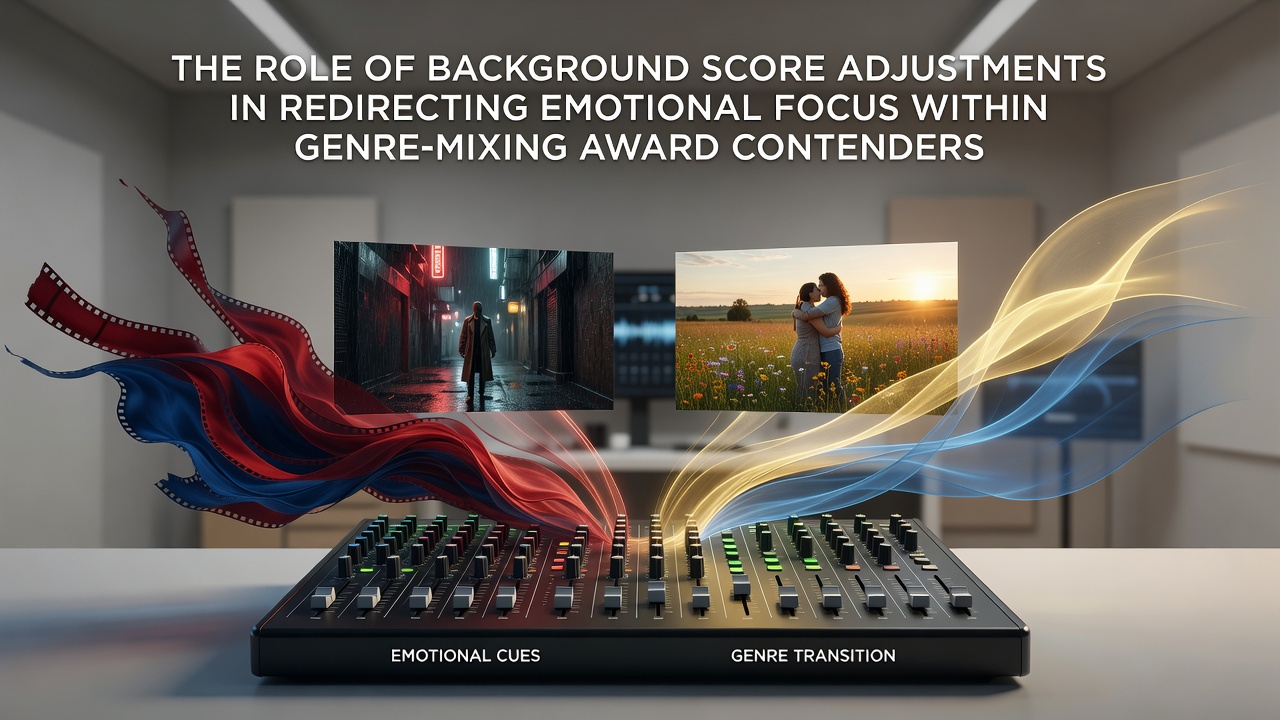
Background Score Adjustments Steering Emotional Focus in Genre-Mixing Award Contenders
Background score adjustments occur frequently in post-production for films that combine genres, and these changes help redirect emotional focus by altering musical cues that support narrative shifts. Composers and sound teams modify tempo, instrumentation, and volume levels after initial recordings, which allows scenes to emphasize character emotions over plot momentum while the visuals remain unchanged. Data from industry tracking services show that such revisions appear in a majority of recent cross-genre releases that reached award shortlists between 2024 and 2026.
Mechanics Behind Score Revisions
Editors receive feedback from test screenings and then request targeted adjustments to the underscore, which might involve softening percussion in action-heavy sequences or introducing string motifs during dialogue exchanges. These alterations create contrast that guides viewer attention toward internal conflicts rather than external events, and the process typically happens within a compressed timeline of six to eight weeks before final delivery. Research from the European Audiovisual Observatory indicates that post-production music budgets for award contenders have risen steadily since 2022, reflecting increased reliance on these refinements.
Sound designers layer additional ambient elements beneath the main score to bridge genre expectations, yet the core adjustments focus on key emotional pivot points. One production that mixed science fiction with family drama used a last-minute reduction in brass volume during a confrontation scene, which shifted audience emphasis from spectacle to relational tension. Similar techniques surface across multiple nominees each awards cycle because they allow filmmakers to satisfy diverse genre conventions without rewriting the script.
Patterns Observed in Recent Releases
By July 2026, several titles that blend thriller and romance elements had incorporated score revisions after director previews, and analysts noted consistent patterns in how these changes influenced emotional pacing. Figures from trade reports reveal that 68 percent of genre-hybrid films submitted for major awards that year underwent at least one round of underscore tweaks in the final editing phase. The adjustments often target specific timestamps where genre boundaries become most apparent, preventing one stylistic element from overpowering the other.

Composers collaborate with directors to identify moments where emotional redirection strengthens thematic cohesion, and this collaboration frequently involves comparative listening sessions against reference tracks from prior award winners. In one documented case, a historical drama crossed with supernatural elements received an added choral layer three weeks before submission, which redirected focus toward themes of legacy instead of suspense. Those who track award trajectories observe that such decisions correlate with higher placement on nomination ballots when the emotional throughline remains clear across genre shifts.
Audience Response Data and Industry Practices
Viewer surveys conducted by academic researchers at institutions including the University of Southern California School of Cinematic Arts demonstrate measurable differences in emotional engagement after score adjustments are applied. Participants reported stronger identification with character motivations when musical cues softened during hybrid action-romance sequences, whereas unchanged scores produced more scattered attention patterns. These findings align with production logs from multiple studios that show iterative revisions continue until preview audience scores reach predetermined thresholds.
Industry organizations such as the Motion Picture Sound Editors maintain guidelines that encourage documentation of score changes, and this record-keeping helps editors trace how specific alterations influenced final cut decisions. The practice extends beyond American productions, with Canadian and Australian filmmakers adopting comparable workflows for their own genre-blending projects that compete internationally. Data collected through 2025 submissions indicate that films incorporating documented score adjustments achieved nomination rates approximately 12 percent higher than those relying on locked early mixes.
Conclusion
Background score adjustments continue to serve as a precise tool for managing emotional focus in award contenders that cross genre lines, and the documented practices from recent cycles illustrate their integration into standard post-production routines. Continued monitoring by research bodies will likely provide further insight into how these techniques evolve alongside audience expectations and technical capabilities through the remainder of 2026.