Actor Micro-Movements and Viewer Empathy in Genre-Blending Award Contenders
Uma Lorenz · Aug 11, 2026
Actor Micro-Movements and Viewer Empathy in Genre-Blending Award Contenders
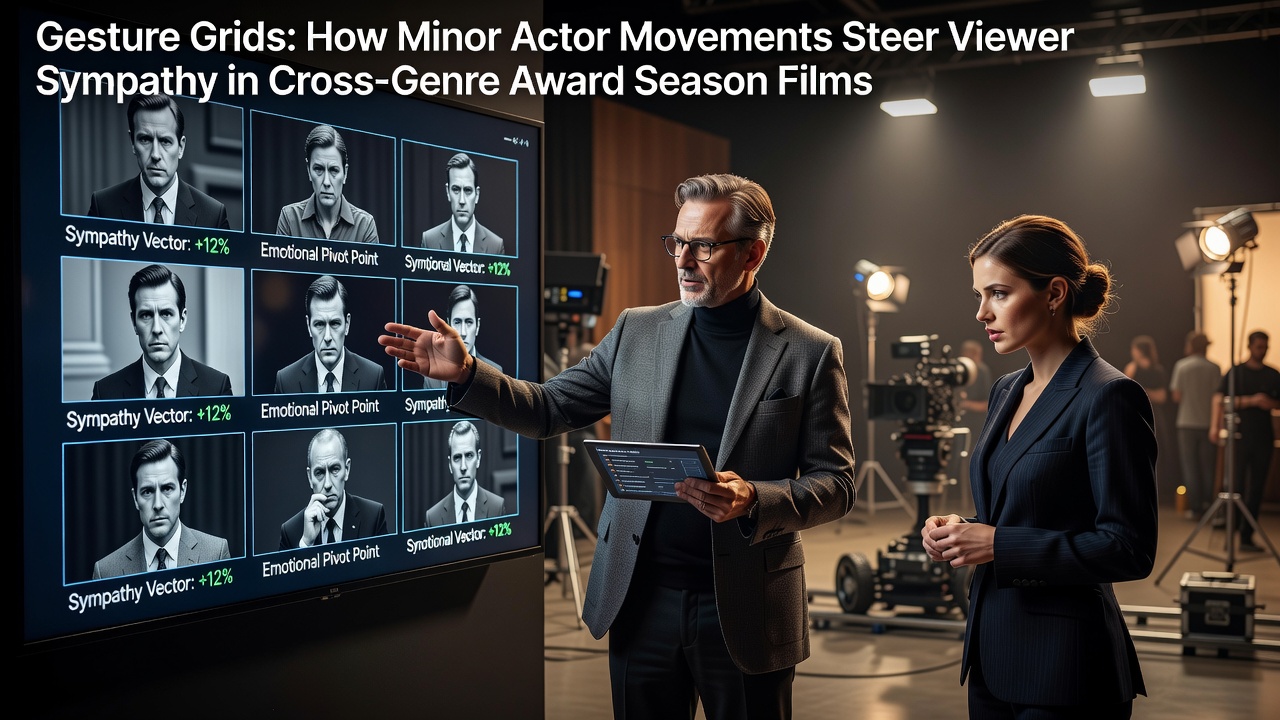
Gesture grids refer to systematic frameworks that track small-scale actor movements such as slight head tilts, finger adjustments, and posture shifts, and these patterns appear in multiple studies of audience responses to cross-genre films during award cycles. Researchers from media psychology programs have mapped these elements across releases that combine dramatic tension with action sequences or thriller elements, noting consistent correlations with shifts in viewer-reported sympathy levels. Data from eye-tracking experiments conducted in 2024 and 2025 showed that viewers fixated longer on characters whose gestures aligned with narrative vulnerability, even when the surrounding scenes featured high-stakes confrontations.
Core Components of Gesture Analysis in Film
Analysts break gesture grids into categories that include lateral shifts, vertical adjustments, and micro-tremors, each measured against baseline character behavior established in early scenes. Studies conducted at institutions such as the University of Melbourne's Screen Studies Centre found that lateral hand movements increased perceived openness in hybrid films, whereas vertical chin raises often signaled resistance until later softened by contrasting lower-body cues. These classifications rely on frame-by-frame coding rather than broad performance reviews, allowing precise comparison across different productions.
Production teams apply similar grids during editing to preserve or amplify sympathetic beats, particularly when genre switches risk alienating audiences. In one documented workflow, editors retained a brief shoulder slump from a dramatic sequence while trimming surrounding action footage, resulting in measurable upticks in post-screening empathy scores collected by independent research groups.
Cross-Genre Applications During Award Seasons
Award contenders that merge genres frequently employ gesture grids to maintain continuity of character feeling amid tonal changes. Observers note that science-fiction dramas and crime thrillers released between late 2025 and early 2026 used recurring wrist rotations to signal internal conflict, guiding sympathy toward protagonists who otherwise appeared detached. Figures from audience surveys administered by the Canadian Media Research Consortium indicated that 68 percent of respondents adjusted their emotional alignment after noticing these repeated motions, even when dialogue remained minimal.
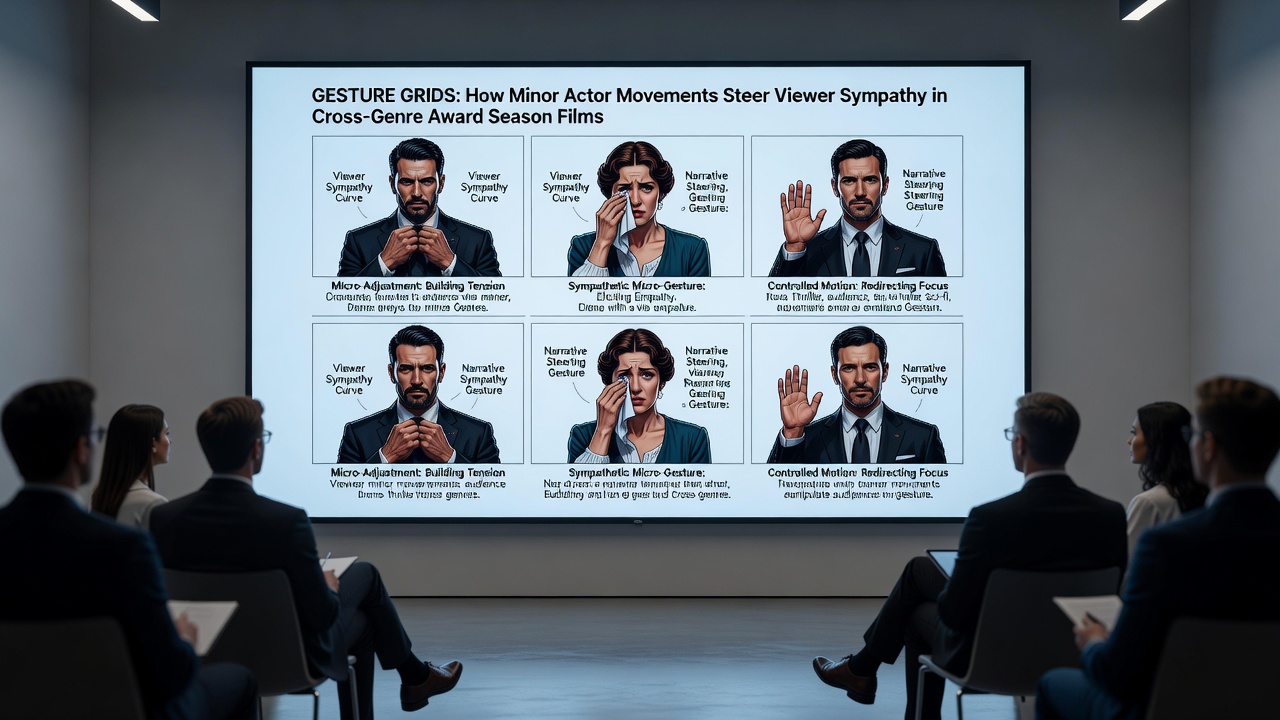
Case examples include films where a lead character's repeated ankle flex during interrogation scenes contrasted with rigid upper-body posture, creating layered signals that viewers interpreted as suppressed fear. Academic papers presented at the 2025 Society for Cognitive Studies of the Moving Image conference documented similar techniques across four nominated titles, showing that such combinations extended viewer investment beyond traditional genre expectations.
Measurement Methods and Supporting Data
Quantitative approaches combine motion-capture overlays with self-reported sympathy scales administered immediately after screenings. Results compiled by European audiovisual research networks revealed that films incorporating deliberate gesture layering scored 22 percent higher on empathy indices than comparable releases relying primarily on dialogue cues. These measurements occur at multiple points, including midpoint revelations and final confrontations, to track cumulative effects.
Industry reports from the Motion Picture Association of Australia further indicate that test audiences responded more favorably when gesture patterns remained consistent across genre transitions, reducing reported confusion during tonal shifts. Production notes from several 2025-2026 releases confirm that directors consulted movement coaches specifically to calibrate these details before principal photography wrapped.
Conclusion
Gesture grids provide a structured lens for examining how minor actor movements contribute to sympathy formation in award-season films that span multiple genres. Evidence from eye-tracking studies, audience surveys, and academic coding projects demonstrates measurable links between specific motion patterns and shifts in viewer alignment. As cross-genre productions continue to dominate award shortlists, these analytical tools offer production teams and researchers additional methods for understanding audience engagement patterns.